OTTO and THE WHALE arrive this week
Two new films arrive on our screens this Friday, very different from each other but both much anticipated.
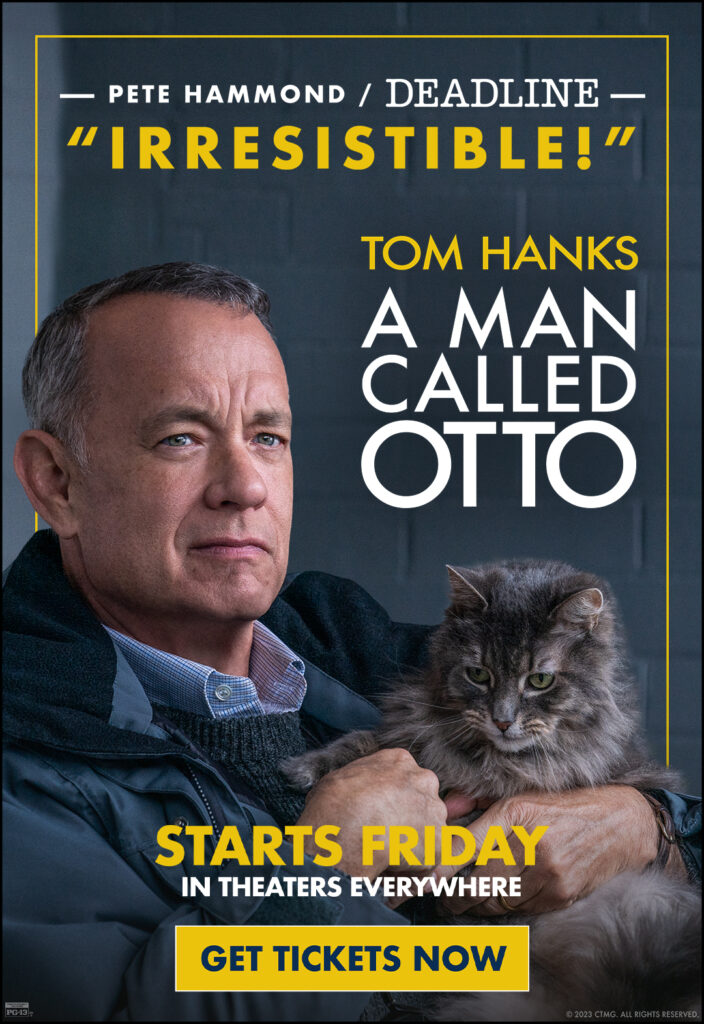
A MAN CALLED OTTO is a heartwarmer starring Tom Hanks as a misanthropic grump. New neighbors and other creatures disrupt his regimented life designed to keep everyone at bay. You’ve never seen a more abrasive, disagreeable Tom Hanks. But as you might have guessed, this film is cinematic comfort food just right to counter January chills.
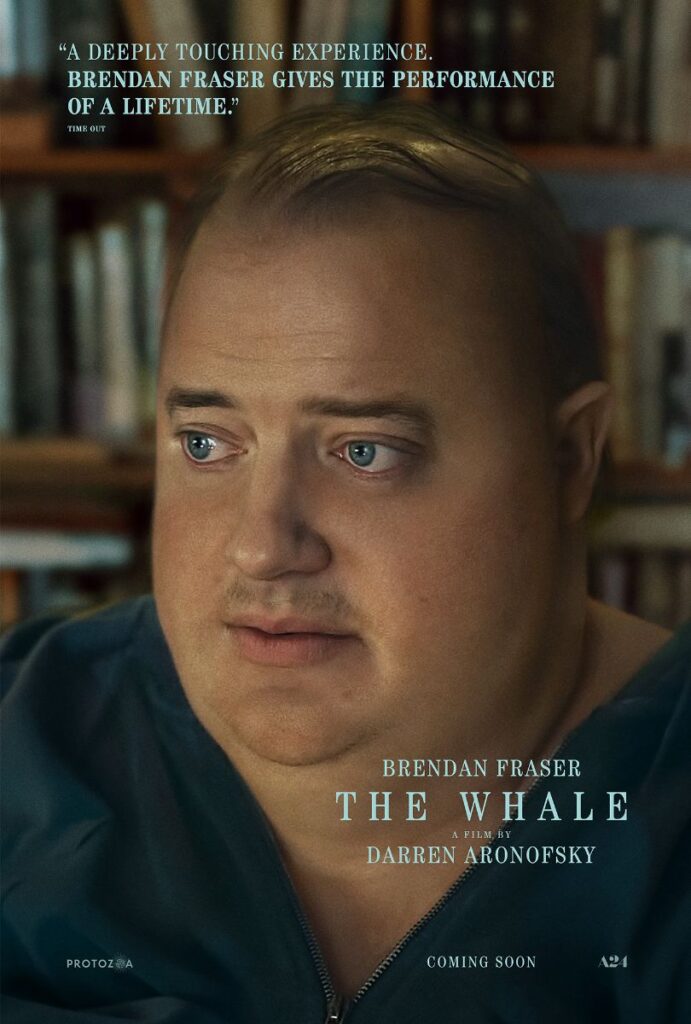
THE WHALE has earned universal acclaim for its star turn from Brendan Fraser as a morbidly obese recluse who tries to reconnect with his estranged daughter. The searing character study has generated controversy, with opinions varying according to viewers’ reactions to depictions of obese people. But everyone agrees that Brendan Fraser is brilliant and a top contender for an Oscar.
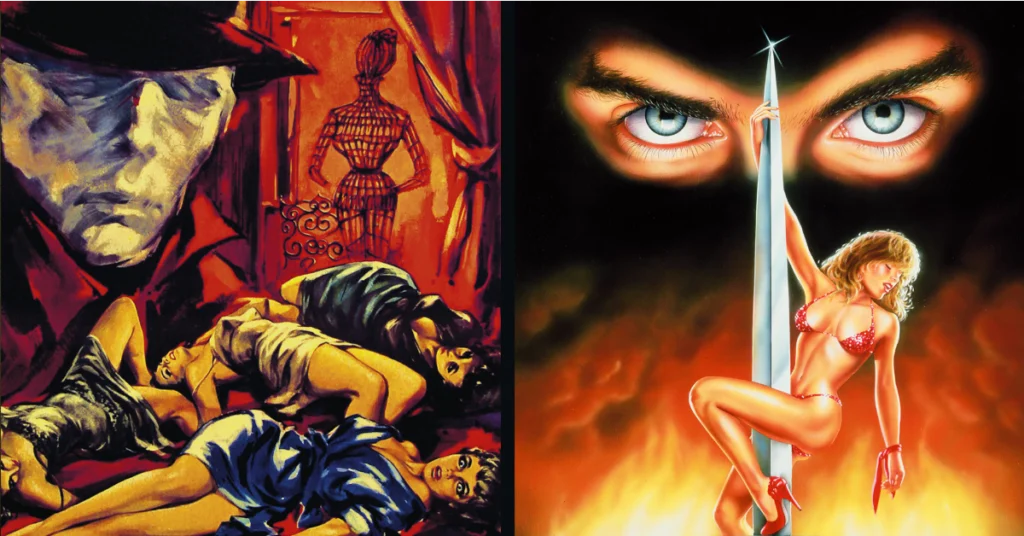
The other event of note this week is our first January Giallo presentation. The double-bill, Thursday the 12th at 7 pm, will feature two giallo classics: BLOOD AND BLACK LACE and STRIPPED TO KILL. See both films for $15. If you’re unfamiliar with giallo — or even if you’re not — read on. Kay’s article on the genre comprises the remainder of this newsletter. It’s fascinating and enlightening, It also displays just one of the many reasons we’re delighted to have Kay as part of the Cinema Salem team.
From Classy to Trashy, and Back Again
By Kay Lynch
Noirvember quickly established itself as an arthouse tradition. In recent years, January Giallo has followed in its footsteps. And there are connections between the two.
Where film noir flirts with perversity, giallo revels in it. Both genres, inspired by pulp novels, explored the darkness from within. While America funded propaganda films to fight fascism in the 1940s, Italy did the same in support of it. Following Mussolini’s authoritarian rule and years of political violence, the fall of censorship laws gave way to a more blunt and visceral response to years of pent up anxiety, depicting a far more liberal embrace of explicit sex and violence. This was especially so compared to the puritanical West.
By 1964, Mario Bava was already a master of cinema, having lensed nearly 50 feature films. His eighth film as director, Blood and Black Lace, would retrospectively be acknowledged as the first giallo (an Italian sub-genre of film named after the yellow paperback crime and mystery novels from the 1930s). In essence a straightforward whodunnit complete with final act reveal of the villain, Blood and Black Lace leaned into its obsession with murderous tableaux, expressionist color, and sadistic violence at the hands of a masked killer.
Interpersonal drama occurs among a group of models, their lovers, and the men who wish — all under the roof of a fashion house co-managed by the darkly featured Countess Cristiana. The plot descends into paranoia once the diary of a recently deceased girl surfaces with a treasure trove of secrets revealing abortion, addiction, sex mania and greed.
Blood and Black Lace, like many of the slasher films it influenced, was once dismissed as a misogynistic exercise in sexualized violence. It’s a fair albeit oversimplified view. One must take into account that the story is dominated by women who hold all the power in one way or another, despite the clueless men trying to get to the bottom of the case. Additionally, the film’s use of mannequins as a repeated motif populates the frame as if to equate models with objectified vehicles of commerce, evoking a more pointed critique of a fashion industry that treats its women as disposable.
In the 1987 film Stripped to Kill, director Katt Shea took the concept one step further, animating bodies as sensual objects of spectacle. With several acting credits to her name, the recent college grad had set her sights on becoming a director. She approached legendary cult producer Roger Corman to fund her debut, pointing out how few women had been tapped to lead his projects — an inequity that persists today.
Corman was not convinced. She refused to concede. After losing a bet with her husband at the time, Shea spent an evening at a strip club. Instead of feeling whatever shame or disgust her husband hoped to provoke, Shea found that the performers embodied a certain power of confidence, and extraordinary physical and creative talent. Knowing very well Corman’s wheelhouse of interests, she pitched a new concept on a single sheet of paper: a cop goes undercover as a stripper to catch a killer. Green light.
Being an American production, Stripped to Kill is naturally aligned with the 1980s slasher boom — a subgenre with a direct lineage to the Italian giallos. Like Blood and Black Lace, Stripped to Kill features a workplace of career women under threat of an unknown killer. The heavily saturated color gels in the club and on the streets evoke a similar vibe to Bava’s signature style.
For a film that features this much grit and nudity, it’s easy to imagine how it might have come across if a man had directed it. But Shea’s vision gives dignity to all the performers, balances strength with vulnerability, and even handles a certain queer element with sophistication not typically seen at the time.
There is a dialogue between the two films. While Blood and Black Lace is undeniably the “classier” affair, Stripped to Kill subverts every expectation and delivers a thrilling and provocative take on an Italian classic.
Blood and Black Lace Stripped to Kill
January 12 at 7:00 PM
Hope to see you at the movies this week!